
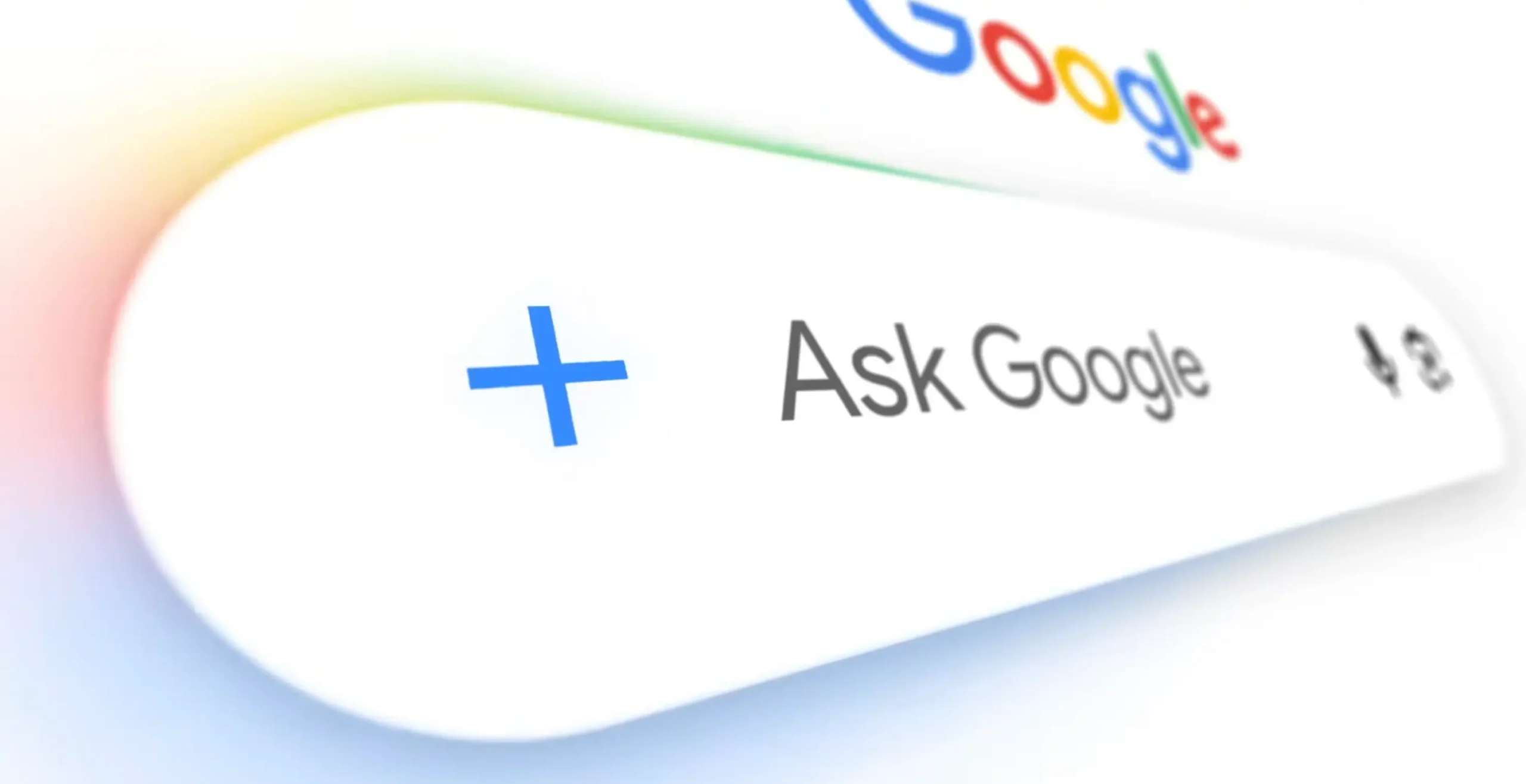

Google has officially introduced the biggest transformation to its search experience in more than 25 years. During Google I/O 2026, the company revealed a completely redesigned AI-powered search interface driven by Gemini 3.5 Flash and a new generation of autonomous Information Agents.
This is not just another algorithm update.
Google is shifting from a traditional search engine into an active AI platform capable of understanding context, processing multimodal inputs, executing tasks, and delivering real-time answers without requiring users to manually browse multiple websites.
For marketers, SEO professionals, publishers, and businesses, this marks the beginning of a new search paradigm.
Google Is Turning Search Into an AI Operating System
At the center of the announcement is the new AI-powered search box. Google redesigned the search interface to support:
- Conversational and long-form prompts
- Multimodal search inputs
- Real-time contextual understanding
- AI-generated summaries and workflows
- Autonomous Information Agents
- Agentic task execution and booking capabilities
The new search experience expands dynamically, encouraging users to type detailed questions instead of short keyword queries.
Rather than relying solely on classic keyword matching, Google now uses Gemini 3.5 Flash to interpret intent, context, relationships between entities, and follow-up interactions.
This fundamentally changes how users search — and how websites need to optimize their content.
Gemini 3.5 Flash Becomes the Core of Google Search
Google confirmed that Gemini 3.5 Flash is becoming the default engine powering AI Mode across Google Search.
The model was specifically optimized for:
- Fast real-time reasoning
- Agentic workflows
- Multistep tasks
- Context retention
- Multimodal understanding
- Large-scale information processing
According to Google, AI Mode has already surpassed one billion monthly users.
This means AI-powered search is no longer experimental. It is becoming the mainstream search experience.
The Rise of Information Agents
One of the most important announcements from Google I/O 2026 was the introduction of Information Agents.
These autonomous AI agents continuously monitor the web 24/7 on behalf of users.
Instead of users repeatedly searching for updates, Google’s agents proactively collect, analyze, and deliver information in real time.
Examples include:
- Monitoring product prices
- Tracking sports scores
- Following breaking news
- Watching stock movements
- Finding travel deals
- Detecting apartment listings
- Monitoring local business availability
Google Search executive Liz Reid described this transition as the beginning of the “Search Agent Era,” where users will be able to create and manage AI agents for nearly any information task.
This changes the role of websites entirely.
In the AI search ecosystem, websites are no longer optimized only for human visitors. They also need to become machine-readable sources for autonomous AI systems.
Multimodal Search Changes User Behavior
The new search box is fully multimodal.
Users can now interact with Google Search using:
- Text
- Images
- Videos
- Files
- Voice
- Chrome tabs
- Combined contextual inputs
For example, users may upload a screenshot, combine it with a written prompt, and ask Google to analyze or compare information across multiple sources.
This dramatically increases the complexity of search queries.
It also means SEO strategies can no longer focus only on traditional text optimization.
Brands now need to optimize:
- Images
- Video metadata
- Structured data
- Product feeds
- Real-time APIs
- Contextual entity relationships
Why Traditional Keyword Research Is Changing
For years, traditional SEO relied heavily on short-tail and mid-tail keyword targeting.
Users typically searched Google using short phrases like:
- “best CRM software”
- “digital marketing agency”
- “running shoes”
Large language models changed that behavior.
Users interacting with AI systems like ChatGPT, Gemini, and Claude became accustomed to using natural conversational prompts.
Google’s redesigned search experience now brings that conversational behavior directly into mainstream search.
Users are increasingly typing:
- “What’s the best CRM for a small B2B SaaS company with a remote sales team?”
- “Compare lightweight running shoes for marathon training under $150.”
- “Find a local marketing agency that specializes in AI SEO and technical optimization.”
This shift means classic keyword research alone is no longer enough.
SEO now requires:
- Semantic optimization
- Entity-based SEO
- Conversational search targeting
- Long-tail prompt optimization
- Query fan-out coverage
- Intent clustering
- AI-readable content architecture
SEO in the Age of AI Agents
The emergence of autonomous AI agents creates an entirely new optimization layer.
Websites must now optimize for:
- Human users
- Search engine crawlers
- AI answer engines
- Autonomous information agents
This requires businesses to rethink how content is structured, updated, and distributed.
Key SEO Priorities for 2026
1. Implement Advanced Structured Data
Schema markup becomes more critical than ever.
AI agents rely heavily on structured information to understand:
- Product pricing
- Availability
- Business details
- Reviews
- Events
- Service offerings
- FAQs
- Locations
Businesses that provide clean structured data gain a significant advantage in AI-generated search results.
2. Publish Real-Time Information
AI agents prioritize fresh and dynamic information.
Static pages with outdated content may lose visibility.
Brands should connect websites to:
- APIs
- Live inventory systems
- Pricing feeds
- Availability updates
- Real-time event systems
The faster Google’s AI can validate updated information, the more likely it is to surface that content.
3. Optimize for Agentic Booking
Google introduced “Agentic Booking,” allowing AI systems to complete actions directly from search results.
This includes:
- Booking appointments
- Reserving restaurants
- Scheduling consultations
- Purchasing services
- Making reservations
Businesses should optimize landing pages and structured data specifically for transactional AI workflows.
4. Create AI-Friendly Content Architecture
AI systems need content that is:
- Structured clearly
- Contextually organized
- Factually accurate
- Easy to extract
- Semantically rich
Long-form authoritative content becomes increasingly important because AI systems prefer comprehensive contextual sources.
5. Monitor AI Visibility
Traditional ranking reports are no longer sufficient.
Businesses must also track:
- AI citation visibility
- AI-generated summaries
- Inclusion in answer engines
- Agent retrieval behavior
- Conversational query coverage
Generative Engine Optimization (GEO) is becoming a critical extension of traditional SEO.
The Business Impact of Google’s AI Search Transformation
Google’s move is also a competitive response to the rapid growth of AI platforms.
ChatGPT, Claude, and other AI systems have changed how users discover information.
For the first time in decades, Google’s position as the default starting point of the customer journey faces serious competition.
The launch of AI agents and Gemini-powered search is Google’s attempt to retain control over:
- Information discovery
- Commercial intent
- Local search
- Product research
- Transactional workflows
- Customer acquisition
This transformation could significantly reduce traditional click-through behavior.
Users may increasingly receive complete answers directly within AI search interfaces.
As a result, brands must focus not only on generating clicks, but also on becoming trusted data sources inside AI ecosystems.
How Businesses Should Prepare Right Now
Organizations that adapt early will gain a major competitive advantage.
Recommended actions include:
Build Entity Authority
Strengthen topical authority around your brand, products, services, and expertise.
Expand Conversational Content
Create content that directly answers natural-language questions.
Improve Technical SEO
Ensure crawlability, indexing, structured data, and API integrations are optimized.
Invest in First-Party Data
Unique proprietary data becomes more valuable in AI search environments.
Update Content Frequently
Freshness signals are increasingly important for AI retrieval systems.
Optimize for Multimodal Search
Improve image SEO, video metadata, transcripts, and contextual media descriptions.
The Future of Search Is Proactive
The biggest change is philosophical.
Traditional search was reactive:
Users searched.
Google responded.
The new AI search ecosystem is proactive:
AI agents monitor information continuously and deliver personalized results automatically.
This fundamentally changes:
- SEO strategies
- User journeys
- Content creation
- Search intent modeling
- Conversion optimization
- Information architecture
The companies that succeed in the next era of search will be the ones that build content ecosystems designed for both humans and AI systems.
Conclusion
Google’s AI-powered search transformation represents one of the most important shifts in the history of SEO.
Gemini 3.5 Flash, multimodal search, Information Agents, and Agentic Booking are redefining how users discover information online.
Traditional SEO is not disappearing — but it is evolving rapidly.
Success in 2026 and beyond will depend on:
- Semantic optimization
- AI-readable content
- Structured data
- Real-time information
- Conversational search coverage
- Generative Engine Optimization (GEO)
Businesses that adapt now will position themselves as authoritative sources inside the next generation of AI-powered search experiences.
Frequently Asked Questions (FAQ)
What is Google’s new AI search experience?
Google’s new AI search experience is a redesigned search platform powered by Gemini 3.5 Flash. It combines conversational AI, multimodal search, autonomous Information Agents, and real-time task execution capabilities.
What are Google Information Agents?
Information Agents are autonomous AI systems that monitor the web continuously on behalf of users. They proactively collect and deliver updates such as product prices, sports results, news alerts, travel deals, and availability information.
How does Gemini 3.5 Flash improve Google Search?
Gemini 3.5 Flash improves search by enabling advanced contextual understanding, multimodal input processing, faster reasoning, conversational interactions, and support for AI-driven workflows.
What is multimodal search?
Multimodal search allows users to search using multiple types of input including text, images, videos, files, voice, and browser context.
What is Agentic Booking?
Agentic Booking is Google’s AI-powered capability that allows users to complete actions such as reservations, appointments, and bookings directly through AI search workflows.
How will AI search affect SEO?
AI search changes SEO by prioritizing semantic understanding, conversational content, structured data, real-time information, and AI-readable content architecture.
Is traditional keyword research still relevant?
Keyword research remains important, but SEO strategies now need to focus more heavily on conversational intent, semantic relevance, long-tail prompts, and entity relationships.
What is Generative Engine Optimization (GEO)?
Generative Engine Optimization (GEO) refers to optimizing content specifically for AI-powered search engines and generative answer systems.
Why is structured data more important now?
Structured data helps AI systems accurately understand products, services, pricing, availability, reviews, and business information, increasing visibility in AI-generated responses.
How can businesses prepare for Google’s AI search future?
Businesses should improve technical SEO, implement advanced schema markup, publish real-time information, optimize for conversational search, and create AI-friendly content structures.