At iGEO, we use cookies and similar tracking technologies to ensure our website works efficiently and to provide you with the best possible experience.
Learn more in our cookies policy or privacy policy.
Last updated: MAY 2026

vs
Semrush is a powerful SEO platform trusted by millions. But its AI Visibility Toolkit is an add-on to a product built for Google — while iGEO was designed from day one to track and grow brand presence in AI-generated answers.
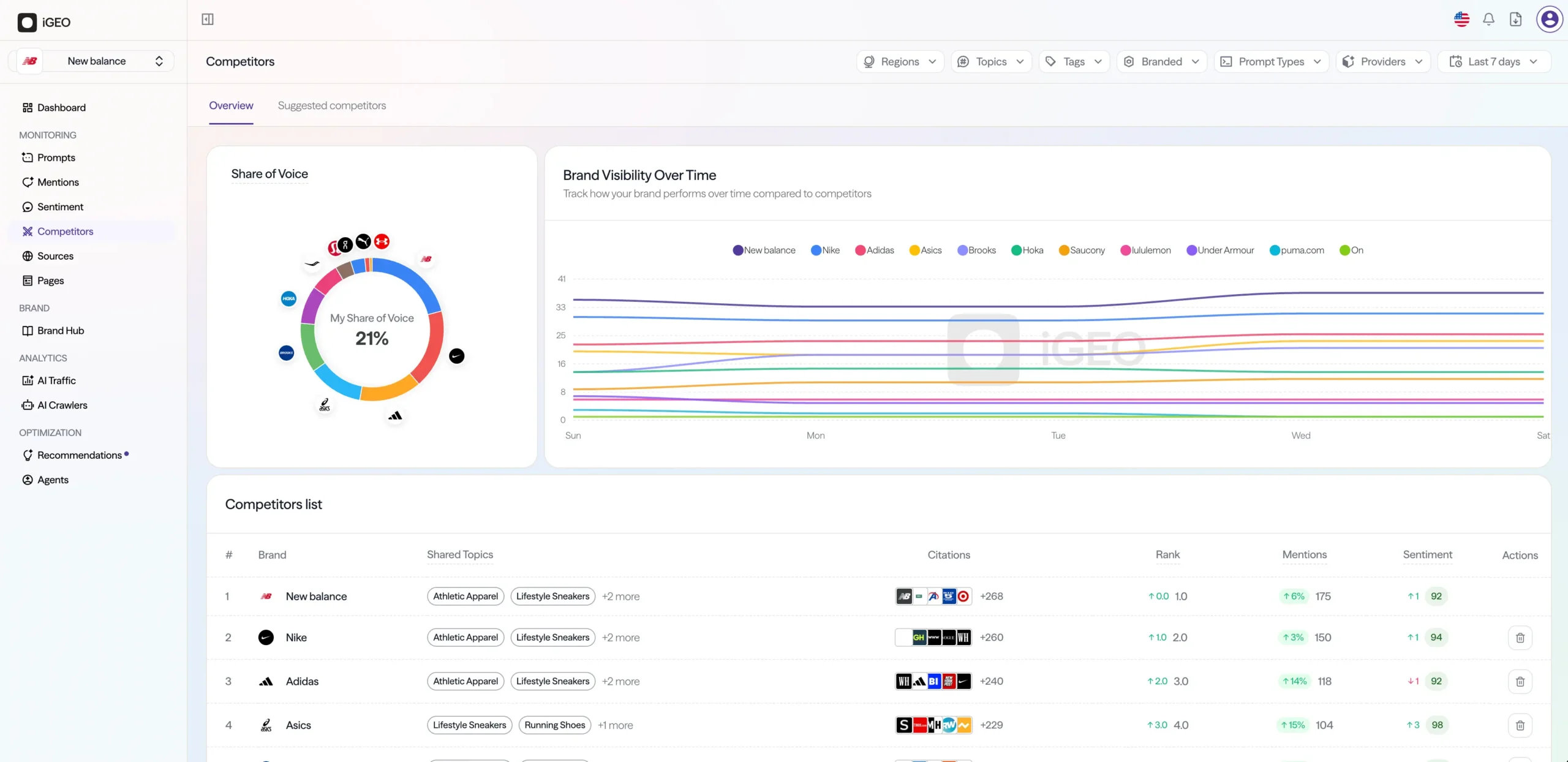
iGEO Admin Console
AI-native platform. Self-service subscription for agencies and enterprises. Track your brand across all AI models — built for generative engine visibility and optimization.
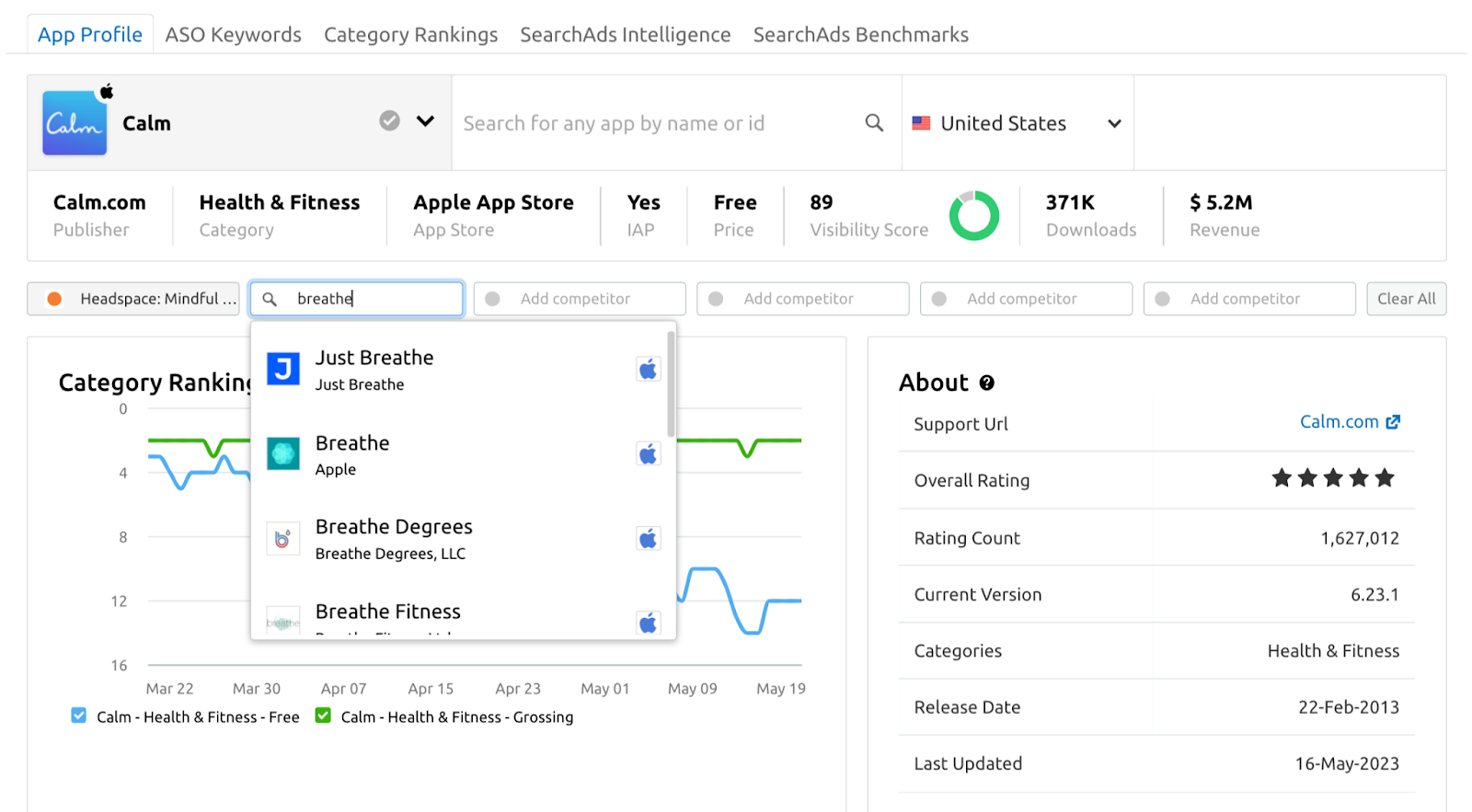
Semrush Admin Console
A leading SEO suite, founded in 2008 and now owned by Adobe, with 28B+ keywords, backlink data, and traffic intelligence. AI visibility is available as a separate toolkit, not its core focus.
The Bottom Line
Semrush dominates traditional SEO — and has added an AI Visibility Toolkit to keep up with the shift. But adapting a legacy platform is not the same as building for AI search from scratch. iGEO was purpose-built for the generative engine era, with every feature serving that one goal.
Best for iGEO
Agencies and enterprises that want a focused, self-service platform purpose-built for AI search visibility — without paying for a vast SEO toolset they don’t need, and without legacy architecture holding back the roadmap.
Best for Semrush
Teams that need a comprehensive all-in-one platform covering traditional SEO, PPC, content, social, and traffic analysis — and who are willing to treat AI visibility as one module within a broader marketing suite.

Key differentiator
Semrush was founded in 2008 to track Google rankings. Its AI Visibility Toolkit — launched years later — is built on that same foundation. iGEO was built from scratch for a world where AI engines answer questions before users ever click a link. That architectural difference matters: iGEO’s prompt-level tracking, funnel-stage mapping, AI sources marketplace, and MCP integration aren’t features added to an SEO tool — they’re what the product is.
AI visibility tracking
Platform origin
Built for AI search from day one
Built for Google SEO since 2008
AI engines tracked
ChatGPT, Perplexity, Gemini, Copilot, Claude, Google AI Overviews, Google AI Mode + more
ChatGPT, Google AI — limited coverage
Prompt-level analysis
Available
Partial — via AI toolkit
Funnel-stage mapping
Awareness → Decision
Not available
White label
Available for Agencies
Not available
Entry price (AI features)
From $175/month
From $139.95/mo (SEO) + AI toolkit add-on cost
MCP integration
Available for all plans
AI Connectors (MCP)
Agent analytics (bot crawl)
Native feature
Share of Voice tracking
AI Share of Voice
AI market share tracking
Built for one thing, done right
iGEO doesn’t split attention between backlinks, PPC, and social. Every feature serves a single goal: helping your brand get recommended by AI engines.
Funnel-mapped AI tracking
iGEO maps prompts and AI mentions to buyer journey stages — Awareness, Consideration, Decision — so you know where your brand shows up and when it matters.
Focused investment
With Semrush, you pay for a vast suite of SEO tools even if AI visibility is your only priority. iGEO’s pricing is built around what you actually use.
MCP-native integration
iGEO connects directly via MCP, letting you pull AI visibility data into your own workflows and reporting pipelines without complex API setup.
AI sources marketplace
Access 30,000+ sites ranked by how often AI models cite them — a strategic advantage for content placement that Semrush doesn’t offer.
Independent and AI-focused
iGEO is an independent company with AI search as its entire mission. Semrush is now part of Adobe — a much larger organization with a broader agenda.
Frequently Asked Questions
The fundamental difference is origin and focus. Semrush was built in 2008 for Google SEO and has since added an AI Visibility Toolkit as an additional module. iGEO was built from scratch to track and optimize brand visibility in AI-generated answers. That means iGEO’s architecture, features, and roadmap are entirely shaped by AI search — not adapted from a legacy SEO product.
Semrush’s AI Visibility Toolkit provides brand mention tracking and AI share of voice reporting, and it has grown significantly. However, it remains one toolkit within a much larger platform primarily built around traditional SEO metrics. iGEO offers deeper GEO-specific features — prompt-level tracking, funnel-stage mapping, AI sources marketplace, and an optimization agent — that Semrush’s AI toolkit doesn’t cover.
Yes. Many teams continue using Semrush for traditional SEO — keyword research, backlink analysis, technical audits, and organic traffic monitoring — while using iGEO specifically for AI search visibility and Generative Engine Optimization workflows. The two tools serve complementary, not overlapping, goals.
iGEO starts at $175/month with transparent, published pricing for agencies and enterprises. Semrush’s core plans start at $139.95/month, but AI visibility features are available as a separate toolkit with additional cost. For teams that only need AI search visibility, iGEO provides focused value without paying for Semrush’s broader SEO toolset.
iGEO tracks brand visibility across ChatGPT, Perplexity, Gemini, Microsoft Copilot, Google AI Overviews, Google AI Mode, and additional AI engines. Semrush’s AI toolkit focuses primarily on ChatGPT and Google AI platforms. Coverage differences may change as both platforms evolve — always check current documentation for the latest supported engines.
iGEO offers white-label reporting, multi-client workspace management under a single agency subscription, and an AI sources marketplace to inform content placement strategy. Semrush has agency plans but does not offer white-label dashboards or the GEO-specific features that iGEO provides.
